×
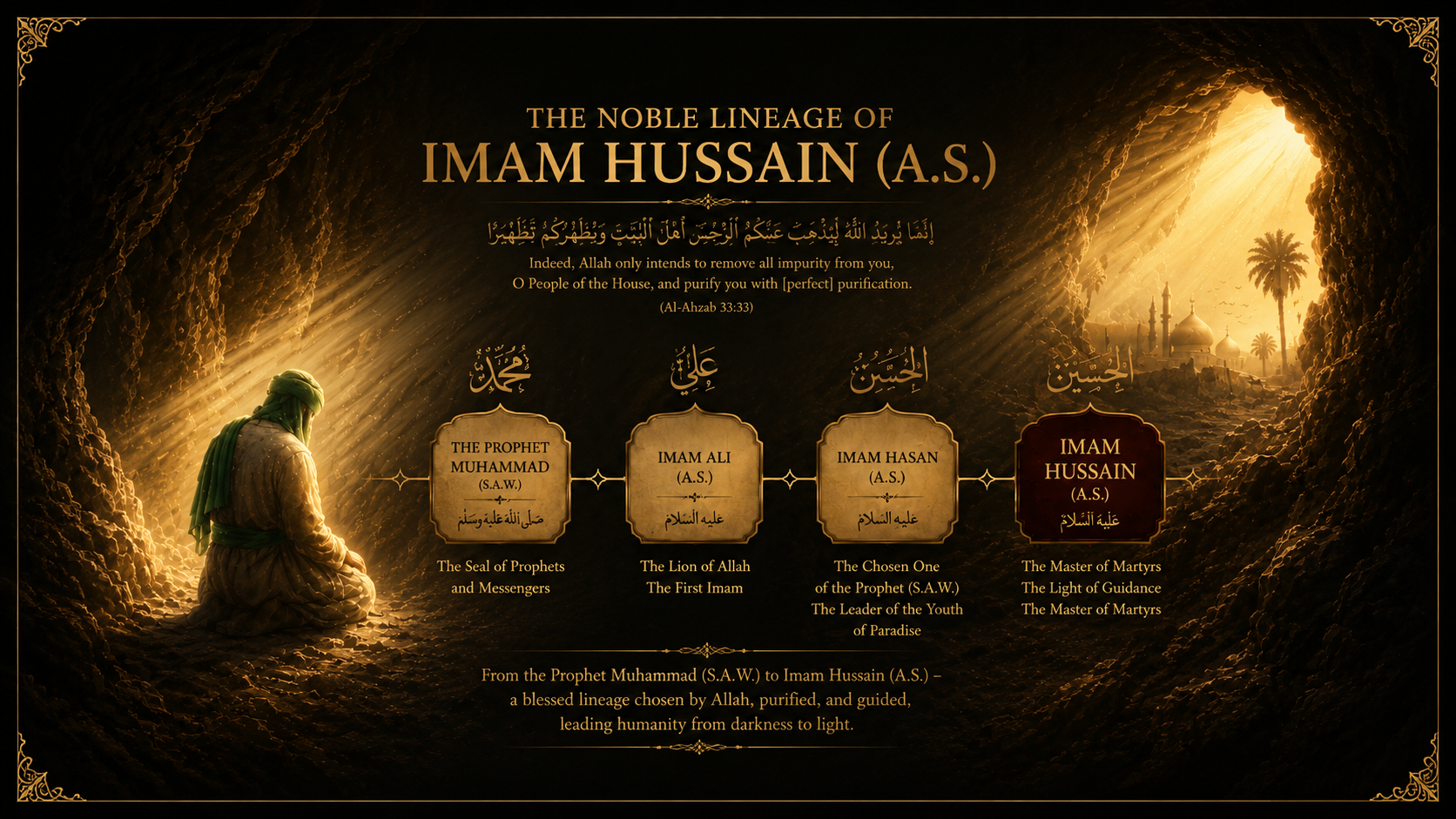
Imam Hussain was a revolutionary leader of the 7th century and a towering spiritual role model for Shia Muslims. The beloved grandson of Prophet Muhammad, he is revered as the third infallible Imam — a divinely appointed guide whose authority encompassed both religious and political leadership.
At a time when such divine guidance was needed most, the Muslim world had fallen under the rule of a ruthless tyrant: Yazid. Seeking to legitimise his oppressive authority, Yazid demanded that Hussain publicly pledge allegiance to him.
“A man like me does not give allegiance to a man like you.”
With those words, the stage was set for the eternal tragedy of Karbala.
Hussain departed from Medina with a small group of loyal companions, including his sister Zainab and his young daughter Sakina, only four years old. They were relentlessly pursued until they reached the barren plains of Karbala, in present-day Iraq, where they pitched their tents.
There, Yazid’s vast army — numbering in the thousands — surrounded them and cut off all access to water for three agonising days.
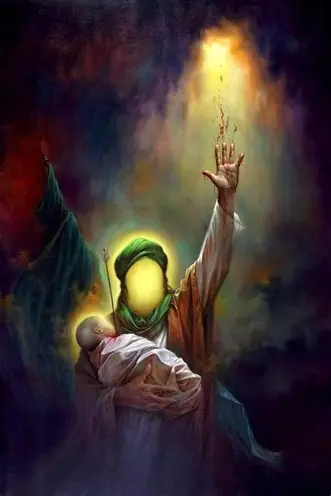
On the 10th of Muharram — the day of Ashura — the enemy launched its final assault. In a merciless massacre, Imam Hussain and his small band of faithful followers were slaughtered. Hussain was beheaded, and his head was raised upon a spear — a chilling symbol of tyranny attempting to silence truth.
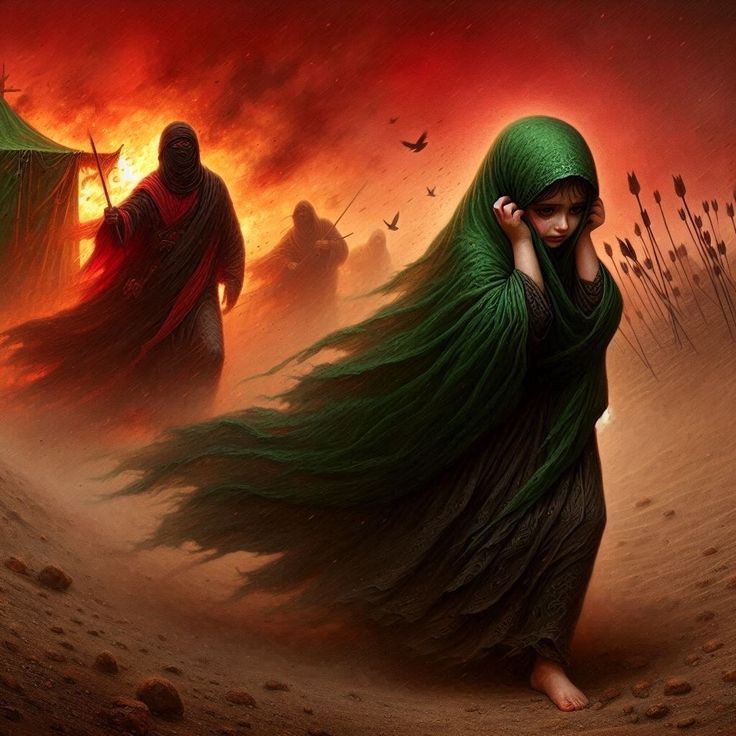
As night fell, the air was filled with the cries of women and children. Every male protector had been killed, except for Imam Hussain’s ailing son, Zain al-Abidin, who had been too ill to fight.
Suddenly, the enemy set the tents ablaze. Amid the chaos and flames, Zainab — resolute and fearless — guided the women and children to safety, carrying her sick nephew with her. Yet one was missing: little Sakina.
She was later found in the heart of the battlefield, lying upon her father’s chest. When Zainab asked how she had found him among the fallen, the child replied that she had heard her father’s voice calling to her.
Even in death, the bond between father and daughter remained unbroken.
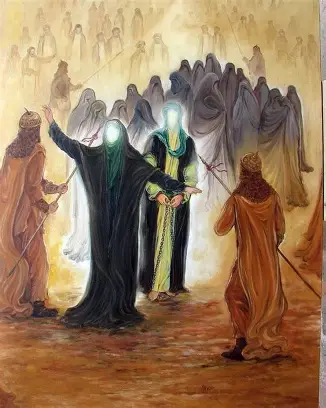
The surviving women and children were taken captive and forced to march from Karbala to Damascus, the seat of Yazid’s power. The family of the Prophet was paraded through the streets like criminals, while crowds — misled into believing they were rebels — hurled insults and stones at them.
When they were brought before Yazid’s court, Zainab stood before the tyrant, surrounded by his nobles. Though dismissed as “just a woman,” she was the daughter of Imam Ali — the legendary warrior and master of eloquence.
When she began to speak, her words shook the court. The crowd fell silent, then stirred with realisation: these captives were not enemies of the state — they were the true heirs of Islam.
Fearing the truth, Yazid ordered the call to prayer to drown out her voice. As the muazzin proclaimed, “I bear witness that Muhammad is the Messenger of God,” Zainab’s voice rose above it:
“Is Muhammad your grandfather… or mine?”
In that moment, the truth pierced every heart.
The captives were taken to prison. It was there that little Sakina — who longed only to rest once more on her father’s chest — passed away.
Zainab was eventually released, as her continued imprisonment became a threat to Yazid’s rule. Her presence awakened the people, and whispers of rebellion began to spread.
She carried the message of Karbala wherever she went, ensuring that its truth would never be forgotten.
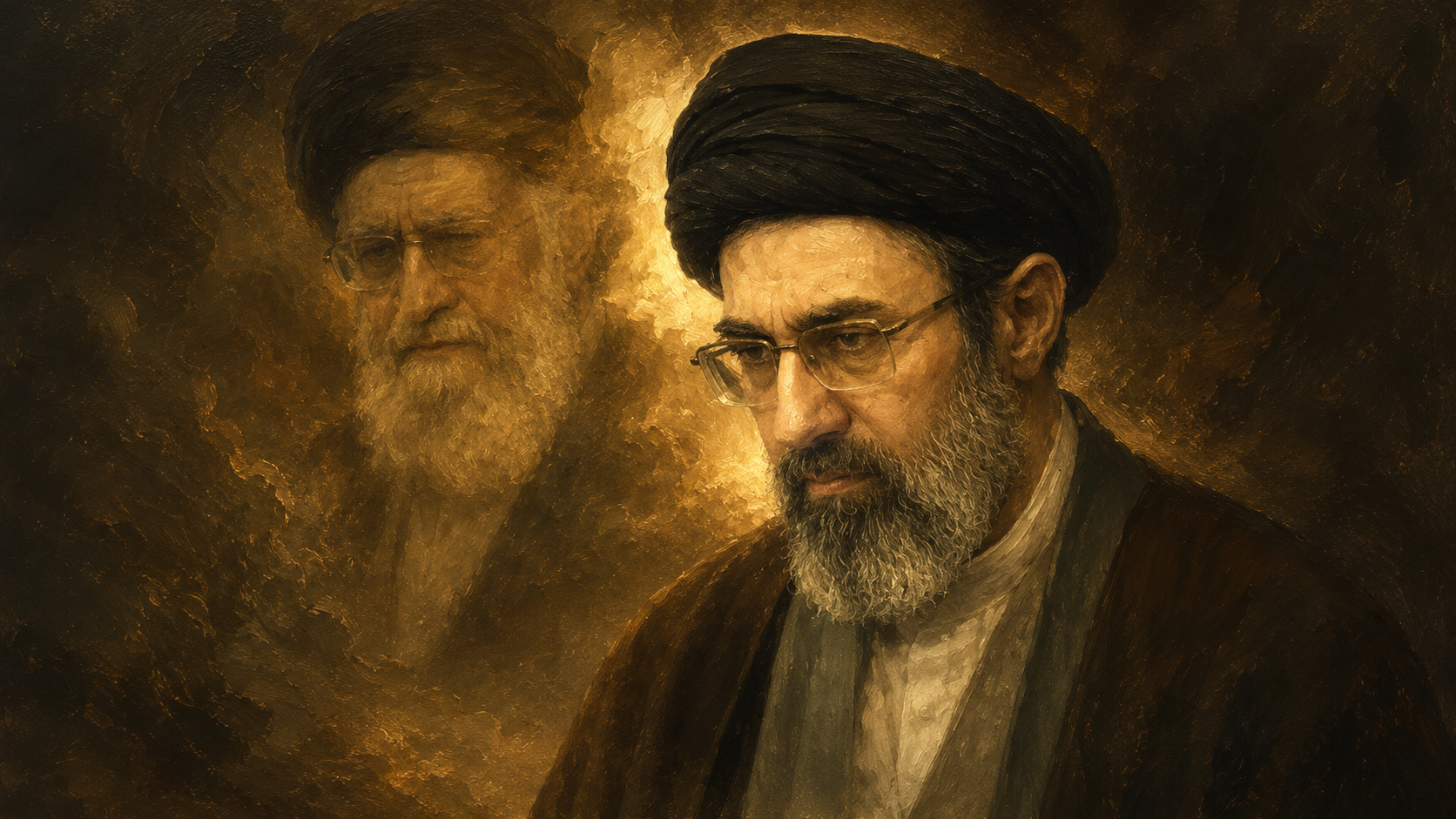
“A man like me does not give allegiance to a man like you”
— became a timeless standard.
In the Shia understanding, religious leadership is not separate from political leadership. When tyranny spreads corruption across the earth and tramples human dignity, the spirit of Hussain calls upon the righteous to stand and resist.
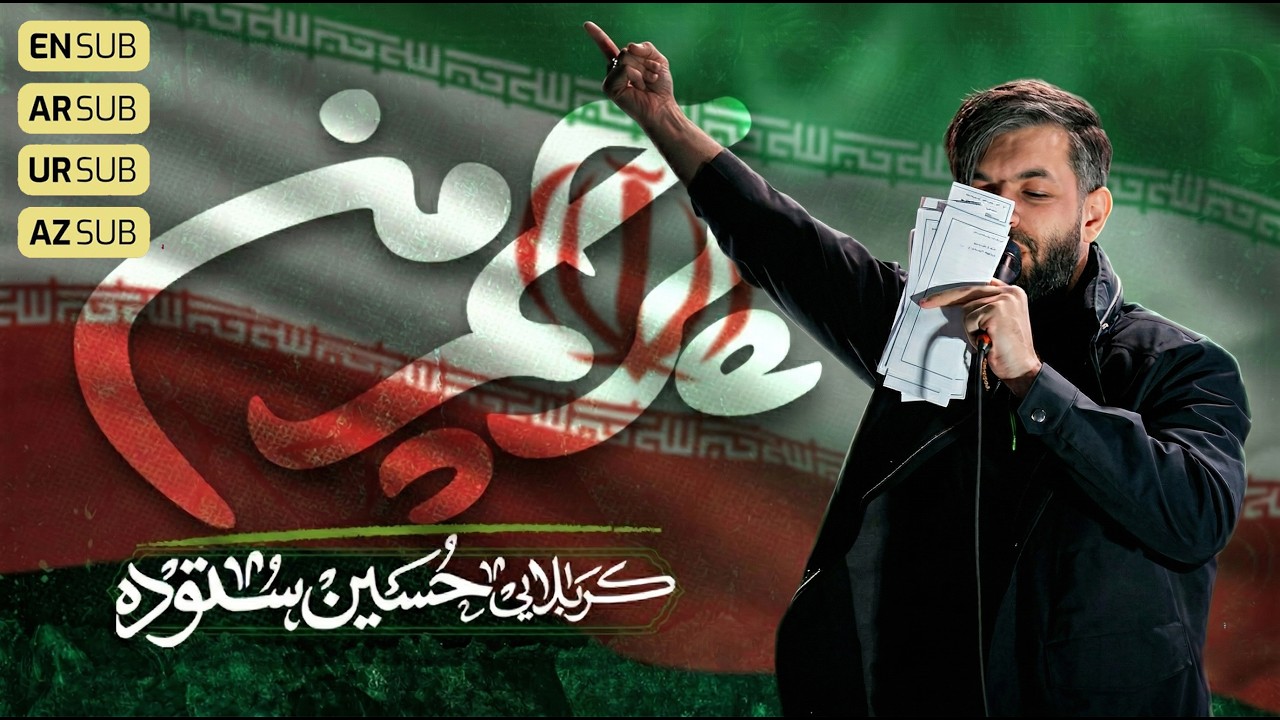
That same spirit lives on today wherever people refuse subjugation. When powers demand surrender or threaten destruction, the cry of Karbala rises once more:
“Never to humiliation.”
The battle that began on the plains of Karbala — the eternal struggle between truth and tyranny — continues in every age, against every oppressor, and will endure until the Day of Judgment.