Centres in Peterborough

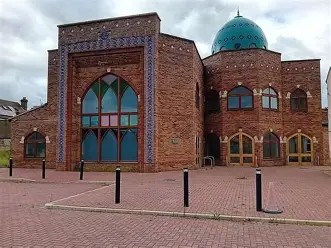

Al-Mahdi Centre
Peterborough Afghan Shia Association
28 Halifields Lane, Paston,
Peterborough, Cambridgeshire,
PE4 7HR
Visit Website
View Location
Peterborough, Cambridgeshire,
PE4 7HR


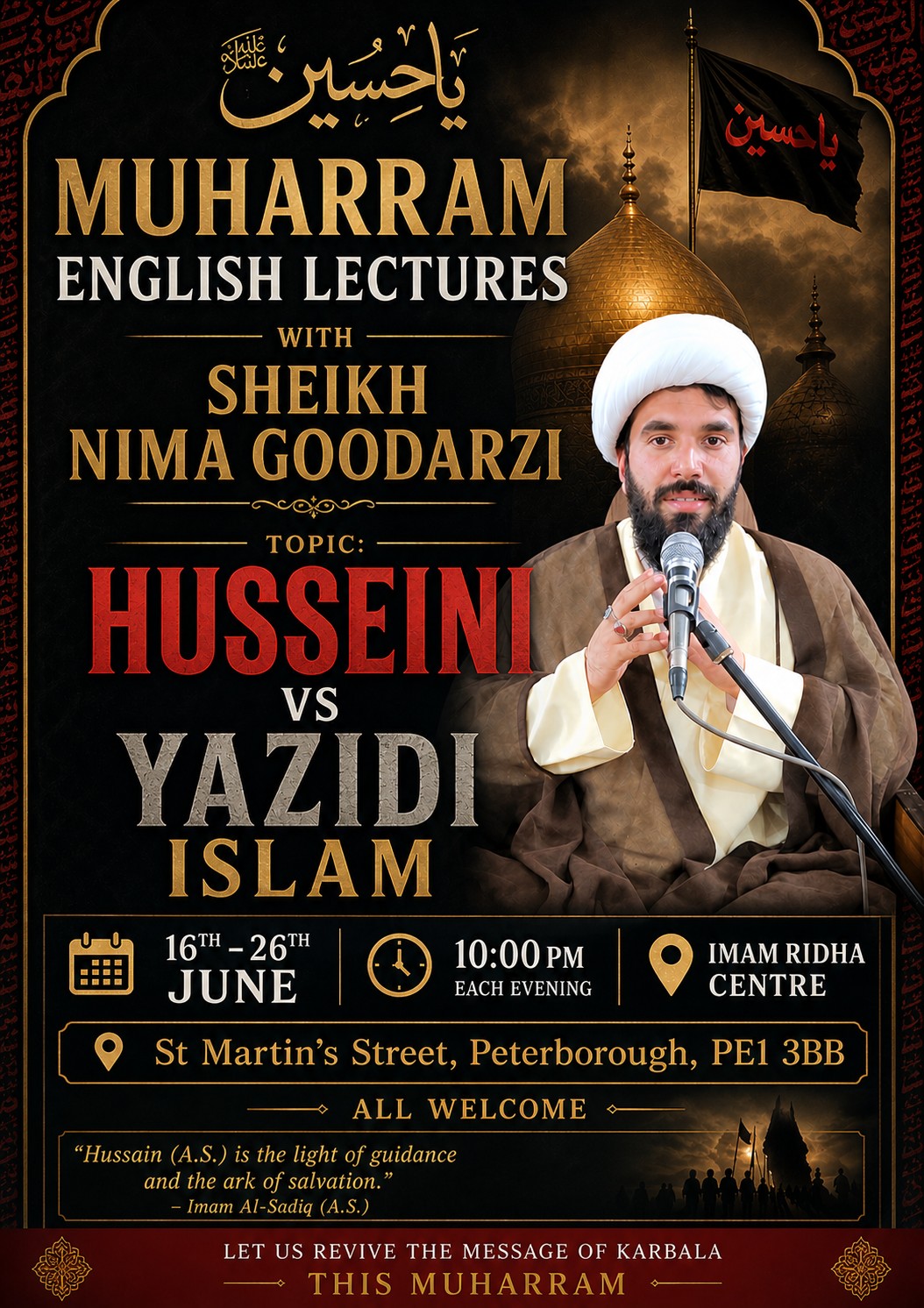
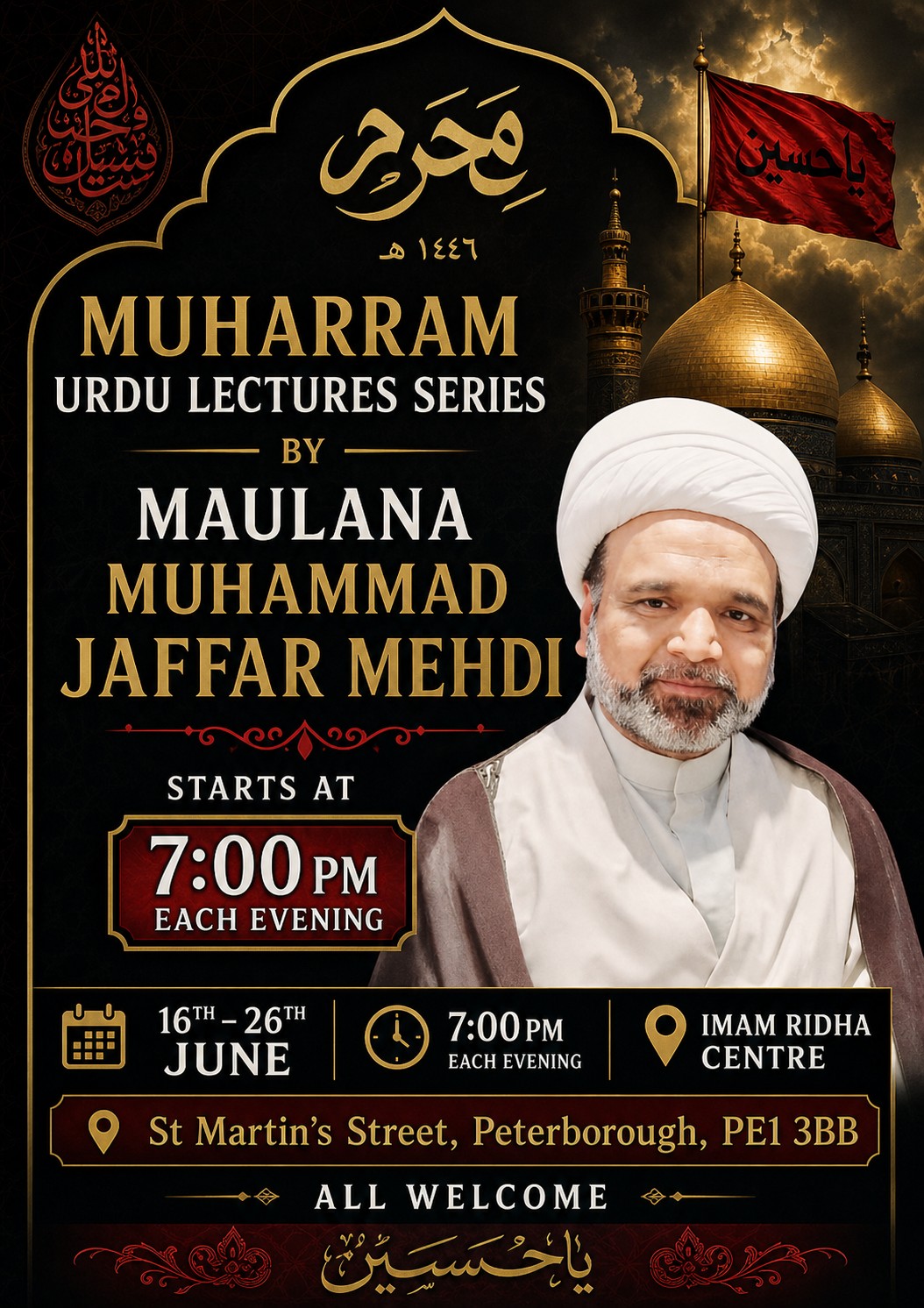
Muharram · 16–26 June 2026
A majlis (literally "a gathering") is where people come together to remember Imam Hussain — his stand for justice, his suffering, and his undying love for God. The tragedy of Karbala took place in the Islamic month of Muharram, the first month of the lunar calendar. During the first ten days of Muharram, Shia Muslims around the world hold commemoration events, night after night, keeping Hussain's message alive.
You are most welcome — everyone is, including women and children. In the mosque (or community hall), men and women will sit separately, as is customary in Islamic worship. There is no pressure to participate in any ritual; simply observing is perfectly fine.
A majlis typically follows this rhythm:
A short passage from the Holy Quran — usually about patience, divine mercy, or the martyrs.
One or two short eulogies in Arabic or the local language, setting the emotional tone of grief and love.
The speaker blends history, spirituality, and contemporary lessons – the character of Imam Hussain, the betrayal, and the timeless message of Karbala.
The final, painful moments: thirst, slaughter, burning tents, orphaned children. Many weep openly – tears for Hussain are a form of devotion.
Rhythmic, sorrowful poems mourning the martyrs. Some gently beat their chests – an ancient custom of grief and a symbolic protest against tyranny.
After the lamentations, the formal gathering ends. Then comes niyaz — a simple meal or refreshments offered as a blessing. It is a time to sit, share, and feel the warmth of community. Many first-time attendees say this is where they feel most welcomed.
Peterborough Afghan Shia Association